Architecture and graphic design share fundamental principles of composition, proportion, structure and spatial organisation.
Form and space constitute the fundamental elements of visual composition. Together, they establish the architectural structure of a design and provide the basis for the arrangement of visual elements. Their proportions, positions and spatial relationships define the composition and determine its visual organisation.
Space & Form
Space, as the primary area of visual composition, provides the basis for the placement and organisation of forms. Each form introduces shape and structure into this space, establishing relationships through proportion, position and scale. The arrangement of these elements influences the distribution of space and determines the overall structure and balance of a composition.
An exploration of geometric forms through repetition, overlap and transparency. The arrangement of circular elements creates a visual structure defined by proportion, contrast and the interaction between positive and negative space.
HIERARCHY
Hierarchy as the organising principle of visual composition establishes the order and relative importance of information. Through variations in scale, position, contrast and spacing, it defines the relationships between individual elements. Primary and secondary elements are distinguished by their visual weight and function. A consistent hierarchy provides structure, directs attention and maintains coherence throughout the composition.
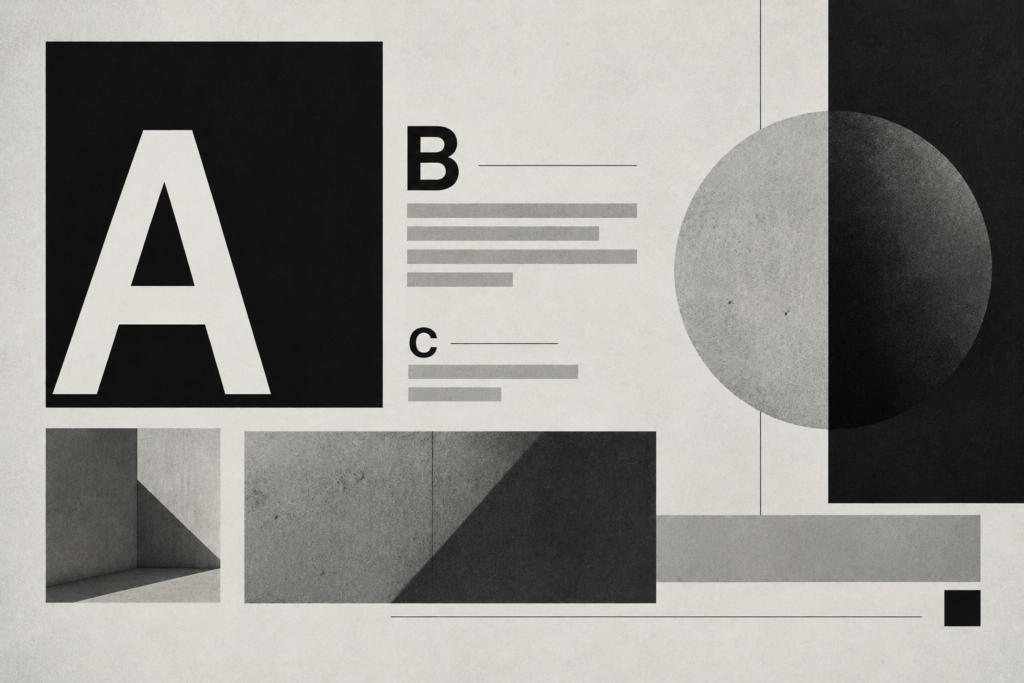
The arrangement of geometric forms establishes visual order through differences in scale, position and tonal weight, defining the relationship between primary and supporting elements.
The interaction of typography, geometric forms and contrasting surfaces demonstrates how scale, proportion and tonal variation establish distinct levels of visual importance within a composition.
“Typography is the art of giving words an appearance of authority, even when they have very little to say.”
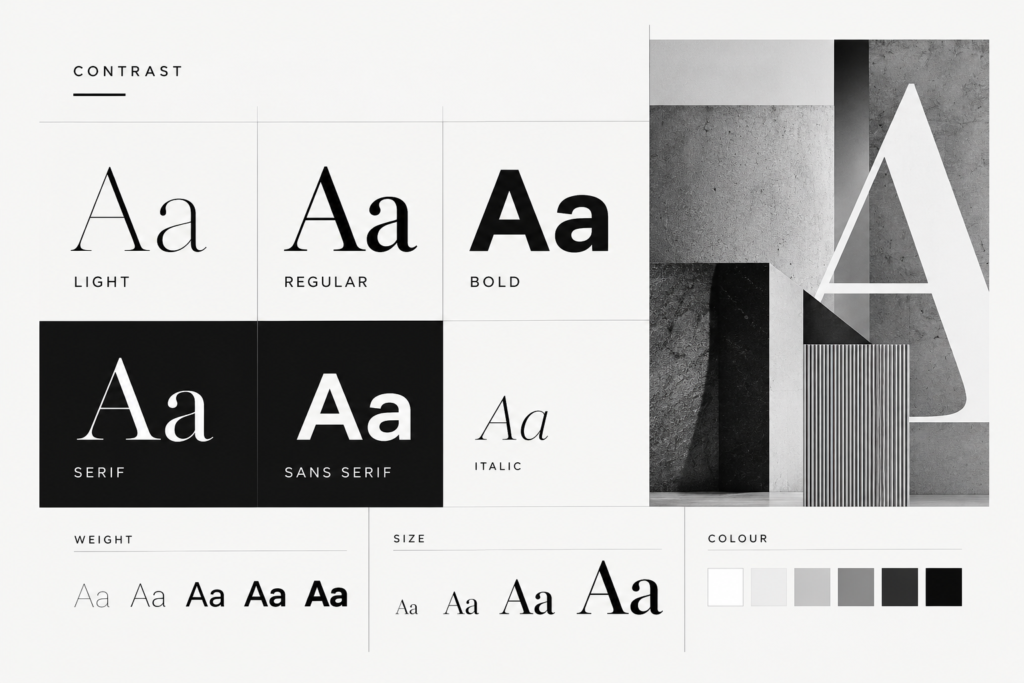
Typographic contrast is established through differences in weight, size, form and tonal value. Serif and sans-serif letterforms demonstrate variations in structural characteristics. Changes in scale and the distribution of black, white and grey determine visual emphasis, legibility and the balance between typographic elements.
IMAGERY
Imagery introduces visual information through photographs, illustrations and graphic representations. Composition, perspective, cropping and scale determine how images relate to surrounding elements. Tonal values, contrast and visual texture influence their appearance and emphasis. The selection and placement of imagery contribute to the structure and visual identity of a design.
Imagery extends beyond visual representation, introducing relationships between form, proportion and space, where composition and perspective establish a distinct visual structure.
Imagery extends beyond visual representation, introducing relationships between form, proportion and space, where composition and perspective establish a distinct visual structure.
Imagery extends beyond visual representation, introducing relationships between form, proportion and space, where composition and perspective establish a distinct visual structure.
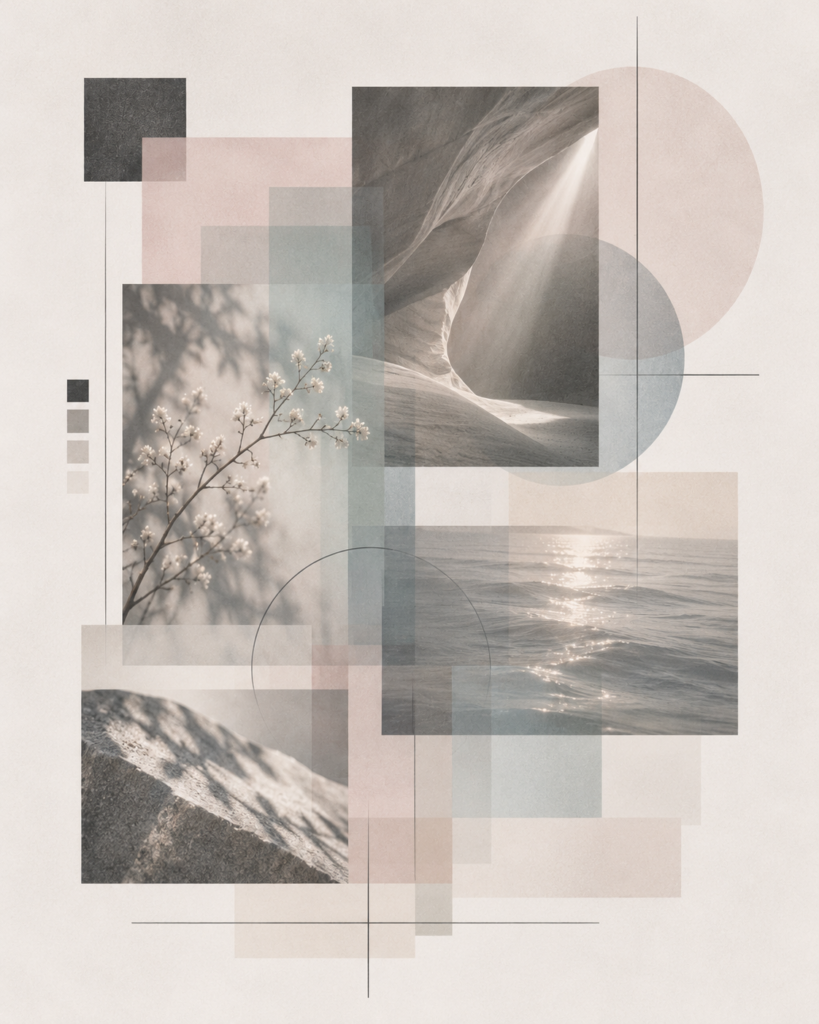
Photographic fragments, natural textures and subtle variations of light come together within a layered composition. Through cropping, transparency and overlapping forms, imagery becomes an integral part of the visual structure, creating depth, rhythm and spatial relationships.
Photographic fragments, natural textures and subtle variations of light come together within a layered composition. Through cropping, transparency and overlapping forms, imagery becomes an integral part of the visual structure, creating depth, rhythm and spatial relationships.
COLOUR
Colour defines visual relationships through hue, saturation and value. Differences in tone and intensity establish contrast, distinguish elements and influence their visual prominence. Colour combinations affect the balance and perception of a composition. A controlled colour palette establishes consistency and supports the organisation of visual information.
Colour extends beyond its decorative function, establishing relationships between form, space and visual perception through subtle variations in tone, contrast and intensity.
Colour extends beyond its decorative function, establishing relationships between form, space and visual perception through subtle variations in tone, contrast and intensity.
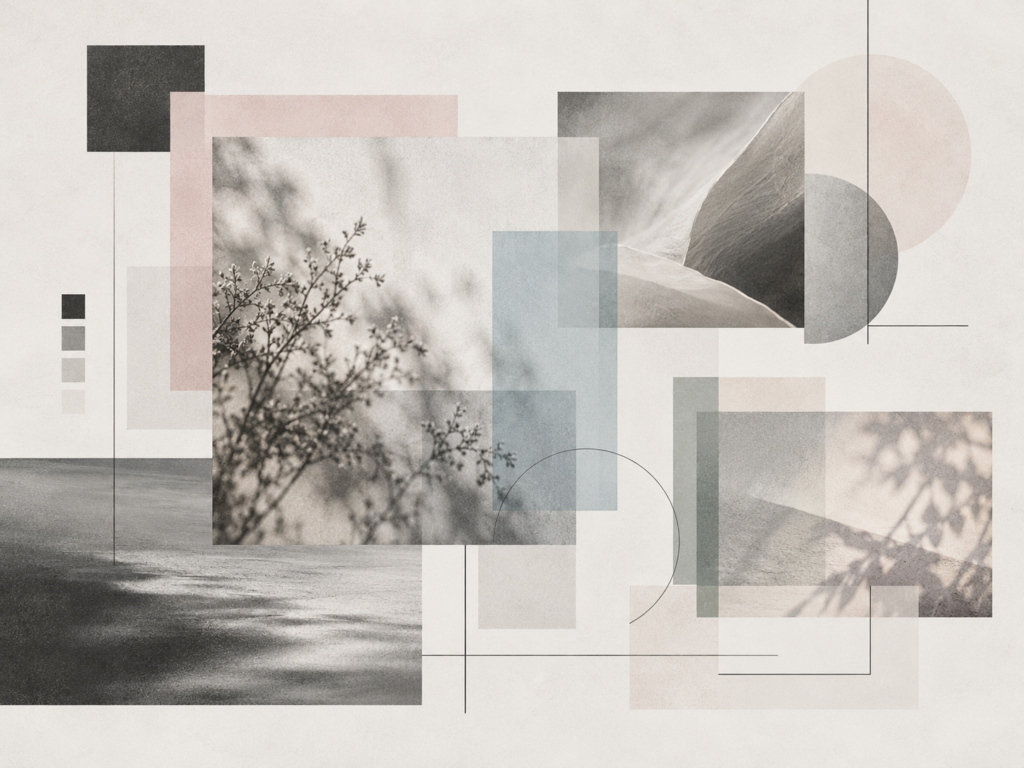
Colour gains its expressive power through interaction. Transparent layers reveal new chromatic relationships, while variations in hue, saturation and tonal intensity create depth and contrast. The interplay of warm and cool tones establishes a dynamic yet balanced visual composition.
Colour gains its expressive power through interaction. Transparent layers reveal new chromatic relationships, while variations in hue, saturation and tonal intensity create depth and contrast. The interplay of warm and cool tones establishes a dynamic yet balanced visual composition.